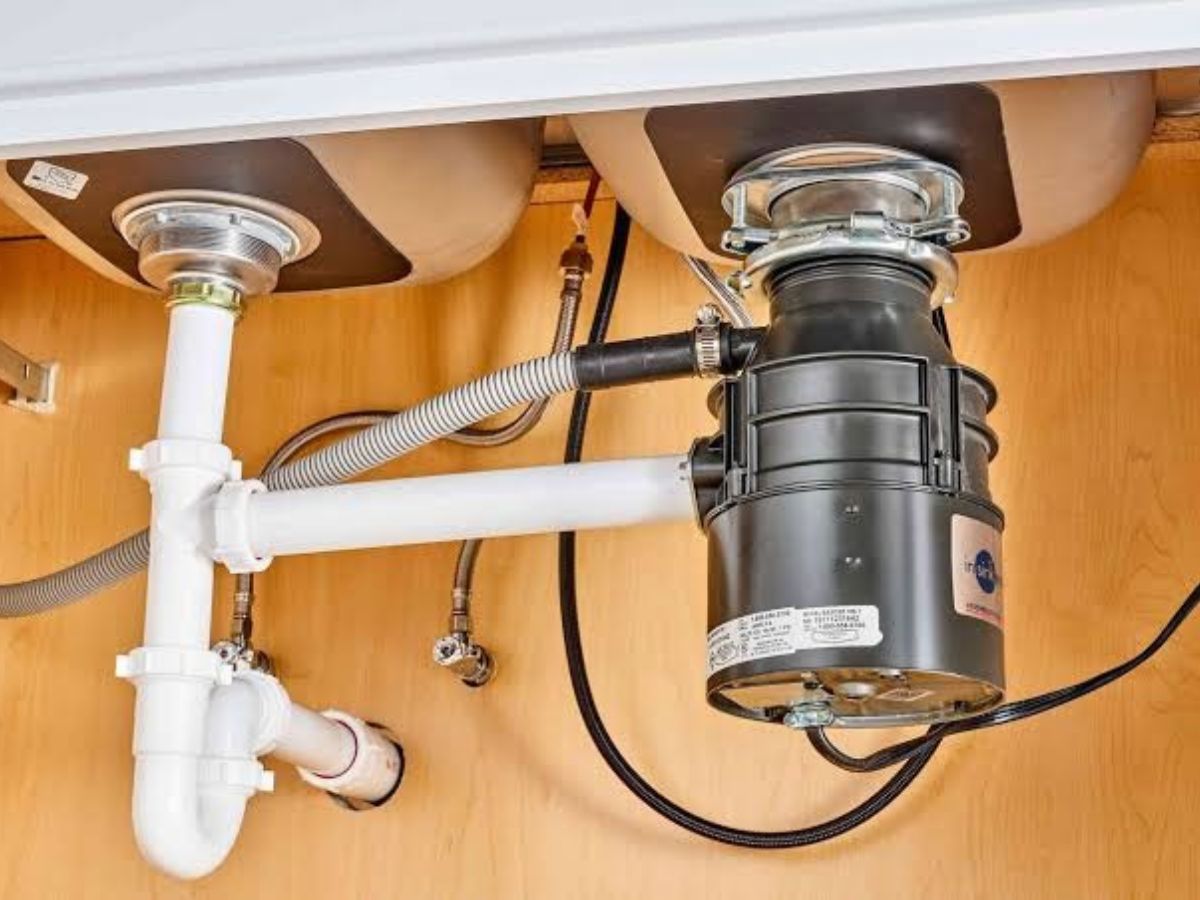
Garbage disposal repair and installation in Wilmington, NC covers jammed units, leaks at the sink flange or discharge pipe, units that hum without spinning, and full replacement when a disposal has reached the end of its service life.
A disposal that hums but doesn't spin is almost always jammed, not electrically dead, and often fixable in minutes with the right approach. A disposal that's leaking is a different problem entirely and usually means a worn seal rather than anything jammed inside.
Emergency disposal repair for leaks and backups
A disposal that leaks into the cabinet or backs up into the second sink is more than a nuisance. Water collecting under the sink can damage the cabinet floor and spread into the wall behind it, and a stalled disposal blocks the kitchen sink you rely on every day.
Call the emergency line if the disposal is leaking steadily or the sink will not drain at all. We find out whether the leak is at the disposal body, a mounting seal, or a drain connection, and send a plumber who can repair or swap the unit on the spot.
Before we arrive: what to do about a leaking disposal
- Turn off the disposal switch and do not put your hand inside the grinding chamber.
- Turn off the sink shutoff valves or stop running water into the sink.
- Empty the cabinet under the sink and set a bucket under the disposal.
- Call (919) 944-7281 and tell us whether the leak is from the unit itself or the pipes.
What actually causes most Wilmington disposal calls
Grease is the single most common cause of both disposal jams and the downstream kitchen-line clogs described on our drain cleaning page. Grease that goes down warm exits liquid, then cools and hardens further down the line, at the disposal's discharge pipe or in the kitchen drain itself, where it catches other debris.
Fibrous foods, celery, corn husks, onion skins, are the other frequent cause of a jammed disposal, since their fibers wrap around the spinning components rather than getting cut cleanly. Neither cause is specific to Wilmington's climate or soil, but they're worth naming since they're genuinely preventable with different kitchen habits.
Signs your disposal needs attention
- The disposal hums when switched on but doesn't spin.
- Water pools under the sink near the disposal unit.
- A burning smell from the disposal after running it.
- Unusual grinding or rattling noise during operation.
- The disposal trips the circuit breaker repeatedly.
What disposal callers usually describe
Disposal calls are almost always one of a few things. The unit hums but does not turn, it leaks from the bottom or the sink flange, it smells even after cleaning, or the sink backs up behind it. Many jams can be cleared without replacing the unit.
We free the jam, check for leaks at the flange and drain, and test the unit under load. If the housing is cracked or the motor is dead, we replace it and make sure the new unit matches the sink.
Disposal repairs in kitchens across the area
Disposals in Myrtle Grove and Ogden kitchens usually jam or hum after a fibrous food scrap gets caught. In older downtown homes, a slow drain behind the disposal may be a sign of a larger line problem.
Beach houses in Wrightsville Beach see heavy seasonal use, which wears out cheap units quickly.
How we handle a disposal call
For a humming disposal, we check for a physical jam first, often a utensil or fibrous food caught in the grinding chamber, before assuming a motor failure. Most jams clear with the right tool and the reset button, not a new unit.
For a leak, we identify whether it's coming from the sink flange, the discharge pipe connection, or the unit body itself. A flange or connection leak is a straightforward reseal or tighten. A leak from the unit body usually means internal seal failure, which means replacement rather than repair. A dripping supply line to the same sink, separate from the disposal, is covered on our faucet and sink repair page.
If a disposal trips the breaker repeatedly, that points to a genuine motor issue rather than a simple jam, and we'll say so rather than keep resetting a unit that's actually failing.
Want us to take a look? Call (919) 944-7281 and we'll walk through what you're seeing.
Repair vs. replace
| Situation | Usual call | Why. |
|---|---|---|
| Jammed, hums but won't spin | Repair (clear jam, reset) | Resolves the majority of disposal calls without replacing anything. |
| Leaking from the unit body itself | Replace | Internal seal failure on the unit body isn't a practical field repair. |
| Trips breaker repeatedly or unit is 8+ years old | Replace | A failing motor or an aging unit is more cost-effective to replace than repeatedly service. |
What affects the price
- Whether the issue is a clearable jam or a genuine unit failure.
- Leak source: flange, connection, or unit body.
- Repair versus full disposal replacement.
- Disposal horsepower and features, if replacing.
Non-emergency estimates are free. For emergency work, we give you the real number before we start. Want yours? Call (919) 944-7281.
What we tell every customer
We won't replace a disposal over a jam that clears with a proper reset. That's the majority of calls, and it's a five-minute fix, not a new unit.
If a leak turns out to be the unit body itself, we'll say plainly that it needs replacing rather than attempt a seal repair that won't hold.
Questions before you decide? Call (919) 944-7281, 24/7.
Garbage disposal questions from Wilmington homeowners
Probably not broken, most likely jammed. That's usually fixable in minutes without replacing the unit.
It's best avoided. Grease exits liquid but hardens further down the line, which is one of the most common causes of both disposal and kitchen drain clogs.
Most units last 8 to 12 years with normal use. A unit that's tripping breakers or leaking from the body at that age is usually a replacement, not a repair.
Not usually, but it's worth addressing soon since ongoing leaks can damage the cabinet and encourage mold under the sink.
Yes. Call (919) 944-7281 to discuss sizing and installation as part of your project.