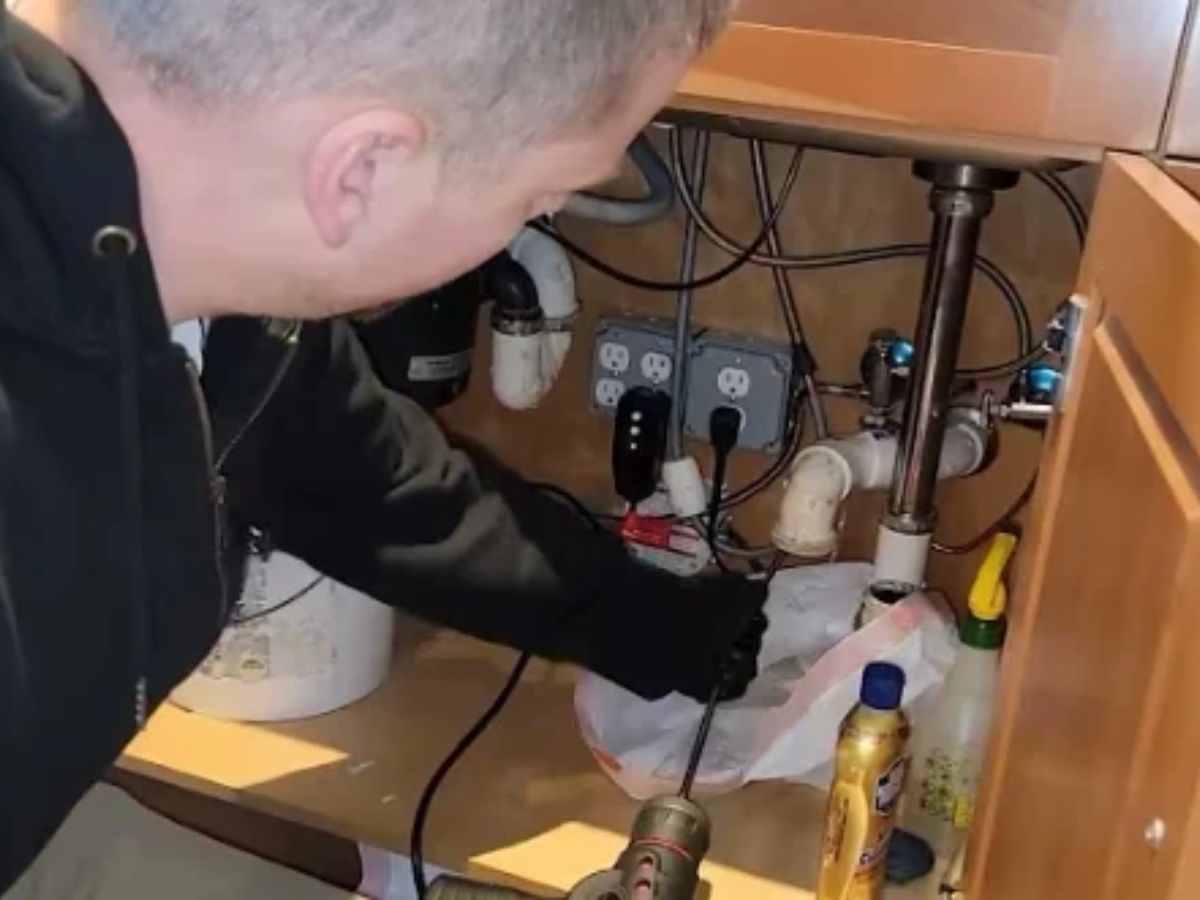
Drain cleaning in Wilmington, NC covers everything from a sink that drains slowly after every shower to a main line backup that stops the whole house cold. Whatever the trigger, the goal is the same: clear the line completely, not just push the clog further down where it will catch again in a month.
Most calls fall into one of two patterns. A single fixture, usually a kitchen sink or a shower, slows down or stops entirely. Or the problem shows up at the main line, where multiple fixtures back up at once and water starts coming up somewhere it shouldn't, like a floor drain or a low toilet.
Emergency drain cleaning when it cannot wait
Most clogs are a nuisance. Some are not. If a drain is backing up into the tub, water is rising in a sink with no sign of draining, or several fixtures gurgle at once, the blockage is likely in a larger line and the mess can reach your floors quickly.
Call the emergency line at any hour. We start by finding out which drain is affected and whether other fixtures are backing up, then send a plumber with cable machines and cameras to clear the line and confirm it flows.
Before we arrive: what to do about a backed-up drain
- Stop using water in the house, including toilets, showers, the dishwasher, and the washing machine.
- Do not pour chemical drain cleaners into a fully blocked drain, since they can splash back and harm the plumber.
- Move rugs and belongings away from any floor drain, tub, or shower that is filling.
- Call (919) 944-7281 and tell us which fixtures are slow or backing up.
Why Wilmington drains clog the way they do
Wilmington's mature hardwood canopy is part of what makes the city's neighborhoods distinctive, and it's also a real, documented cause of recurring sewer line clogs. Tree roots seek out the moisture inside a sewer line and can work into a joint that's slightly open, which is why the same drain sometimes clogs on almost the same schedule every year.
A clog that keeps coming back at the same spot, rather than moving between fixtures, is also worth ruling out as a hidden leak feeding extra moisture into the surrounding soil.
Older homes closer to downtown, built before modern pipe materials were standard, are more likely to have cast iron or clay sewer laterals. Both materials develop a rough interior surface and small joint gaps over time. That rougher surface and those gaps catch grease, paper, and roots more easily than a smooth modern PVC line does.
That's a real difference between a downtown Wilmington clog and one in a newer subdivision further out, and a lateral with this kind of wear is a different repair than a supply-line problem covered on our repiping page.
Signs it's time to call, not wait
- A sink or shower drains noticeably slower than it did last week.
- Gurgling sounds from a drain when a different fixture is used.
- Water backing up into a shower or floor drain when you run the washing machine.
- A recurring clog in the same drain every few months.
- Sewage smell near a floor drain or in the yard.
- More than one fixture backing up at the same time.
Kitchen sink clogs and slow drains
Kitchen sinks clog from grease, food scraps, and soap that harden inside the pipe. A slow drain that gurgles, a sink that backs up into the second basin, or a dishwasher that drains into the sink are all warning signs.
We cable the line, then confirm it flows with water running at full volume. If the same clog returns in a few weeks, we look further down the line with a camera, because the problem is often a belly in the pipe or buildup beyond the cable's reach.
Snaking, cabling, and when a cable is not enough
Cabling is the standard fix for a localized blockage. A cable with the right head breaks through hair, paper, and soft buildup quickly. It does not scrape the full pipe wall, and it can leave a hole through a thick layer of grease or scale.
If a line keeps clogging after cabling, hydro jetting or a camera inspection is the next step. We explain why before we recommend it. Learn more on our hydro jetting page.
Shower, tub, and bathroom sink drains
Bathroom drains slow down from hair and soap film. A tub that drains slowly and gurgles can also point to a vent problem or a larger blockage shared with other fixtures. If more than one fixture is slow, the clog is probably downstream.
We pull hair from the trap area first, then cable the branch line. If the whole bathroom group is slow, we clear the main branch instead.
Drain calls from downtown kitchens to Market Street strips
Restaurants along Front Street downtown and on the Market Street corridor in Ogden put heavy grease into their lines. A home drain in Myrtle Grove or near Monkey Junction clogs for different reasons, usually hair, soap, or roots.
Homes under the oak canopy in Brookwood and Carolina Place see roots reach into older clay drain lines. We match the method to the cause instead of running the same cable through every pipe.
How we clear it
For a single slow fixture, we start with a drain snake sized to the line, which clears most kitchen and bathroom clogs in one visit. If the clog is grease-based, common in kitchen lines, a snake alone sometimes leaves residue on the pipe wall that catches the next clog quickly, so we'll flag that rather than call the job done and have you call back in three weeks.
For a main line backup, especially one that repeats on a yearly pattern, we run a sewer camera first to see exactly what's happening inside the pipe: root intrusion, a bellied section, or a genuine blockage. That inspection is what tells us whether snaking will hold or whether hydro jetting, which scours the full interior of the pipe rather than punching a hole through the clog, is the better long-term fix.
Hydro jetting uses high-pressure water to clear grease buildup and root intrusion from the entire pipe wall, not just the clog itself, which is why it holds longer on a line that clogs on a repeating schedule.
Want us to take a look? Call (919) 944-7281 and we'll walk through what you're seeing.
Snaking vs. hydro jetting
| Method | Best for | Trade-off. |
|---|---|---|
| Drain snaking | A single, isolated clog in a kitchen or bathroom line | Fast and lower cost, but may not remove grease film or root growth along the pipe wall. |
| Hydro jetting | Recurring clogs, grease buildup, or confirmed root intrusion | Higher cost per visit, but clears the full pipe interior and holds longer. |
| Camera inspection first | Any clog that has come back more than once | Adds a diagnostic step, but avoids paying twice for the wrong fix. |
What affects the price
- Which fixture or line is affected: single sink versus main line.
- Whether a camera inspection is needed to confirm the cause.
- Snaking versus hydro jetting once the cause is known.
- Access point: a cleanout is available versus needing to pull a fixture.
- How far into the line the clog or root intrusion sits.
Non-emergency estimates are free. For emergency work, we give you the real number before we start. Want yours? Call (919) 944-7281.
What we won't do
We don't recommend pouring chemical drain cleaners down a slow line before calling, especially in older Wilmington homes with cast iron or clay sewer laterals, since those chemicals can damage aging pipe material without actually clearing the real blockage.
If a clog turns out to be root intrusion in the sewer lateral rather than something inside the house, that's a distinct repair covered on our sewer line repair page, not a simple drain cleaning. We'll tell you plainly rather than treat it as a one-time snake job that will just come back.
A slow drain paired with a rusty tint in the water usually isn't a drain problem at all. That combination often points back to an aging water heater or corroding supply line, and we'll say so rather than clear a drain that was never the real issue.
Questions before you decide? Call (919) 944-7281, 24/7.
Drain cleaning questions from Wilmington homeowners
No, and it usually points to tree root intrusion or a grease buildup along the pipe wall rather than a new, unrelated clog each time. A camera inspection tells us which one it is.
We'd rather you didn't, especially in an older home with cast iron or clay sewer lines, since the chemicals can damage the pipe without solving a root or grease-based clog.
Snaking clears a path through the clog. Hydro jetting scours the entire inside of the pipe, which is why it holds longer against grease buildup and root intrusion.
Yes. A main line backup affecting multiple fixtures is treated as an emergency call, 24 hours a day.
We cover Wilmington and the surrounding New Hanover County area. Call (919) 944-7281 to confirm coverage for your address.
Yes. Yard drains, trench drains, floor drains, and grates fill with silt and debris. Tell us where it is and what is happening, and we send the right equipment.
Often yes. The air gap leaks when the drain line from the dishwasher is blocked or slow. We clear the line and check the air gap and hose connections.
Tell us the pipe size and what is blocking it. Culvert and storm pipes need different equipment than household drains, and we will tell you whether we can handle it.