Sewer line repair in Wilmington, NC is different from a routine drain cleaning. Drain cleaning clears a blockage. Sewer line repair fixes actual damage to the pipe itself, a crack, a collapsed section, a joint pushed apart by roots, that no amount of snaking or jetting will permanently resolve.
The clearest sign you need a repair rather than another cleaning is a backup that returns on a short, repeating schedule even after the line has been cleared. That pattern usually means the pipe itself has a structural problem feeding the clog, not that the clog was never fully cleared.
Emergency sewer backup response in Wilmington
A sewer backup is a health problem as well as a plumbing problem. Gurgling toilets, water coming up in a tub or floor drain when you run the washing machine, or sewage showing in the lowest fixture in the house all point to a blocked or broken main line.
Call the emergency line right away. We ask which fixtures are affected, tell you what to avoid using, and send a plumber to clear the line and run a camera to see whether roots, a collapse, or a belly in the pipe is behind the backup.
Before we arrive: what to do about a sewer backup
- Stop using every water fixture in the house, including toilets, showers, and the washing machine.
- Keep children and pets away from standing sewage and wear gloves and boots if you must enter the area.
- Do not run a shop vacuum or use chemical cleaners on a sewage backup.
- Call (919) 944-7281 and tell us which drains are backing up and how far the water has spread.
Why Wilmington sewer laterals fail
Homes near downtown Wilmington built before modern pipe standards often still run on original cast iron or clay sewer laterals, both of which crack and develop open joints over many decades of service. Once a joint opens even slightly, tree roots from the city's mature hardwood canopy find the moisture inside and grow directly into the pipe, gradually restricting flow until the line effectively collapses under the root mass.
The area's sandy coastal soil and pockets of shifting Piedmont clay add a second failure path. Ground movement can offset pipe joints or crack a rigid line over time, independent of root intrusion, which is why a camera inspection matters even on a home without obvious old-growth trees nearby.
Signs your sewer line needs repair, not just clearing
- The same backup returns within weeks of being cleared.
- Multiple drains back up at once, especially the lowest fixture in the house.
- Gurgling from drains not currently in use.
- A sinkhole or unusually soggy, green patch in the yard along the line's path.
- Sewage odor in the yard or near a cleanout.
Camera inspection and locating the problem
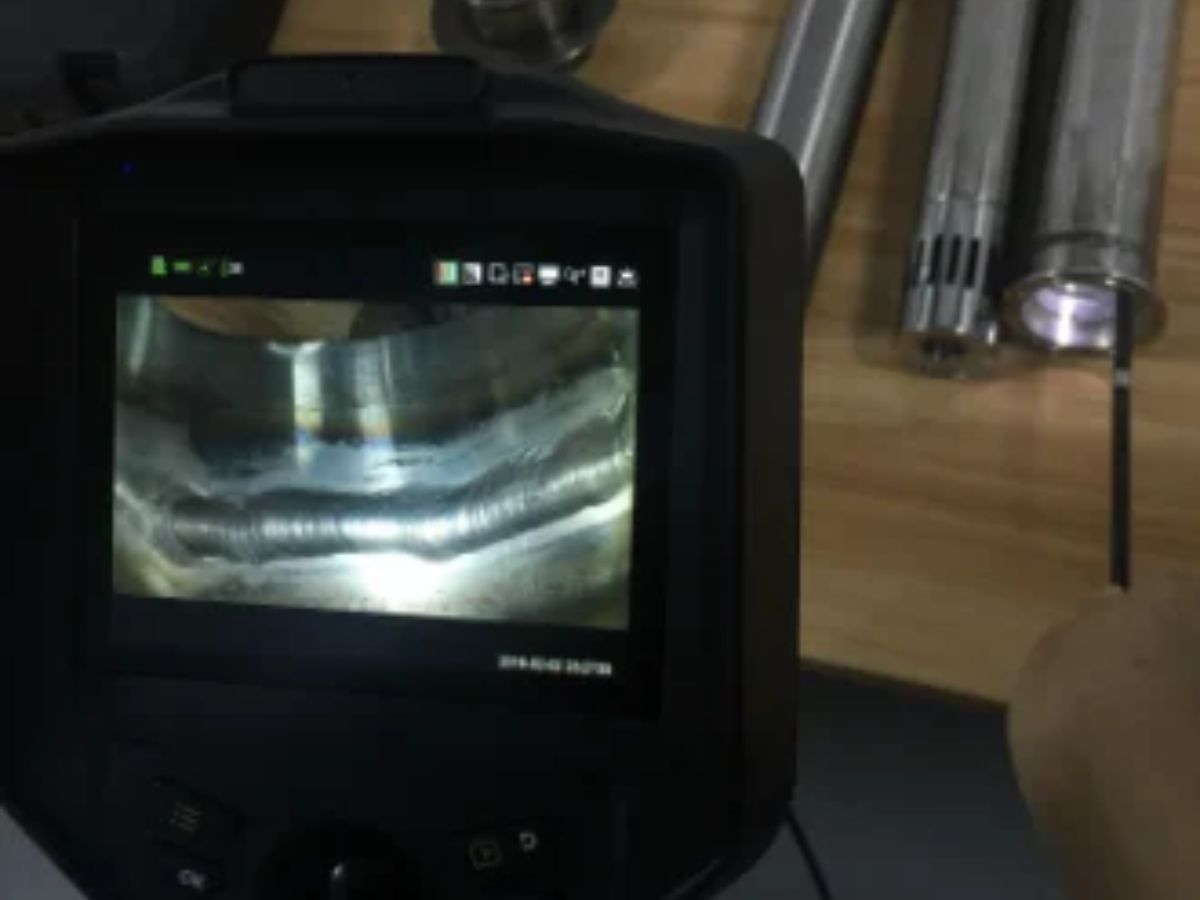
Sewer line calls start with symptoms. Repeated clogs, slow drains throughout the house, or sewer odors in a bathroom suggest a problem outside the house line. A camera shows what is in the pipe and where.
We run a camera through a cleanout or fixture, note the distance, and locate the problem at ground level. That gives you a clear picture for repair or replacement. A single break is a very different job from a long run of failing pipe.
Sewer backups and floor drains
A true sewer backup shows up at the lowest drain first. Water appears in a tub, a shower, or a floor drain when you flush or run the washing machine. That pattern means the main line is blocked.
Stop using water and call. We clear the line, run a camera, and tell you whether the blockage was a one-time event or a sign of a failing pipe. Our page on drain cleaning covers lesser clogs.
Septic systems versus city sewer
Some callers are not sure whether their house is on city sewer or a septic tank. The answer matters. Sewer line work applies to a pipe that leads to a municipal main. A septic tank and drain field are a different system with different service needs.
If you are not sure, tell us your address and we will help you work it out. If the problem is the tank or drain field rather than the house line, we will say so and point you in the right direction.
Sewer repairs where roots and wet ground cause trouble
Mature oaks in the historic districts near downtown push roots into joints in older sewer lines. Wet ground in Navassa, near the Brunswick and Northeast Cape Fear rivers, can shift or crack a buried pipe.
A camera inspection shows which problem we are dealing with, whether it is a single broken joint behind a house on Market Street or a longer section failing near Castle Hayne.
How we diagnose a sewer line problem
We run a sewer camera through the line first, always, before recommending a repair method. The camera shows exactly what's happening: a specific cracked section, a root mass at a joint, a bellied section holding standing water, or a fully collapsed run. If the camera instead shows a sound pipe coated in grease or root growth rather than actual damage, hydro jetting is usually the better, less invasive fix.
What the camera finds determines the fix. A single damaged section can often be fixed with a spot repair or trenchless lining, without excavating the whole yard. A line that's collapsed or damaged along most of its length usually needs a full section replaced.
We'll show you what the camera actually found, not just describe it, so the repair recommendation is based on evidence you can see, not a guess.
Want us to take a look? Call (919) 944-7281 and we'll walk through what you're seeing.
Sewer line repair methods
| Method | Best for | Trade-off. |
|---|---|---|
| Spot repair | A single cracked or root-damaged section | Limited excavation, doesn't address other aging sections of the same line. |
| Trenchless pipe lining | A line with multiple minor defects but sound overall shape | Avoids major excavation, doesn't work on a fully collapsed section. |
| Full section replacement | A collapsed or severely damaged run | More excavation and higher cost, but the only real fix for a collapsed pipe. |
What affects the price
- Camera inspection to confirm the exact cause and location.
- Depth and accessibility of the damaged section.
- Repair method: spot repair, trenchless lining, or full replacement.
- Any landscaping, driveway, or hardscaping above the line that needs restoration.
Non-emergency estimates are free. For emergency work, we give you the real number before we start. Want yours? Call (919) 944-7281.
What we won't do
We won't recommend a full line replacement without camera evidence showing that's actually needed. A lot of sewer problems are a single damaged section, not the whole line. And a sewer line issue is never confused with a repiping job on our invoice. They're different systems with different fixes.
We also won't keep billing for repeat drain cleanings on a line the camera shows is structurally damaged. At that point we'll say plainly that clearing it again won't hold.
Questions before you decide? Call (919) 944-7281, 24/7.
Sewer line repair questions from Wilmington homeowners
Drain cleaning clears a blockage inside a sound pipe. Sewer line repair fixes actual damage to the pipe itself, which a cleaning alone can't resolve for long.
Not always. A single damaged section can often be fixed with a spot repair or trenchless lining, both of which involve far less excavation than a full replacement.
A sewer camera inspection, run before any repair is recommended. It shows the exact location and nature of the damage rather than leaving it to guesswork.
Often, yes. Original cast iron or clay laterals in older homes are more prone to cracking and root intrusion than modern PVC lines in newer construction.
A full backup affecting multiple fixtures is treated as an emergency, 24/7. A slow, recurring issue can usually be scheduled, though we'll always tell you honestly which situation you're in.
A dry trap or a slow leak at the drain can let sewer gas into the room. We check the trap and run a camera if the smell persists.
Usually, yes. We find the cleanout or the line path and mark it so a camera or repair can happen without guessing.
Ejector pumps lift wastewater from a low bathroom or basement to the main line. Tell us the model and the problem and we will confirm what we can do.