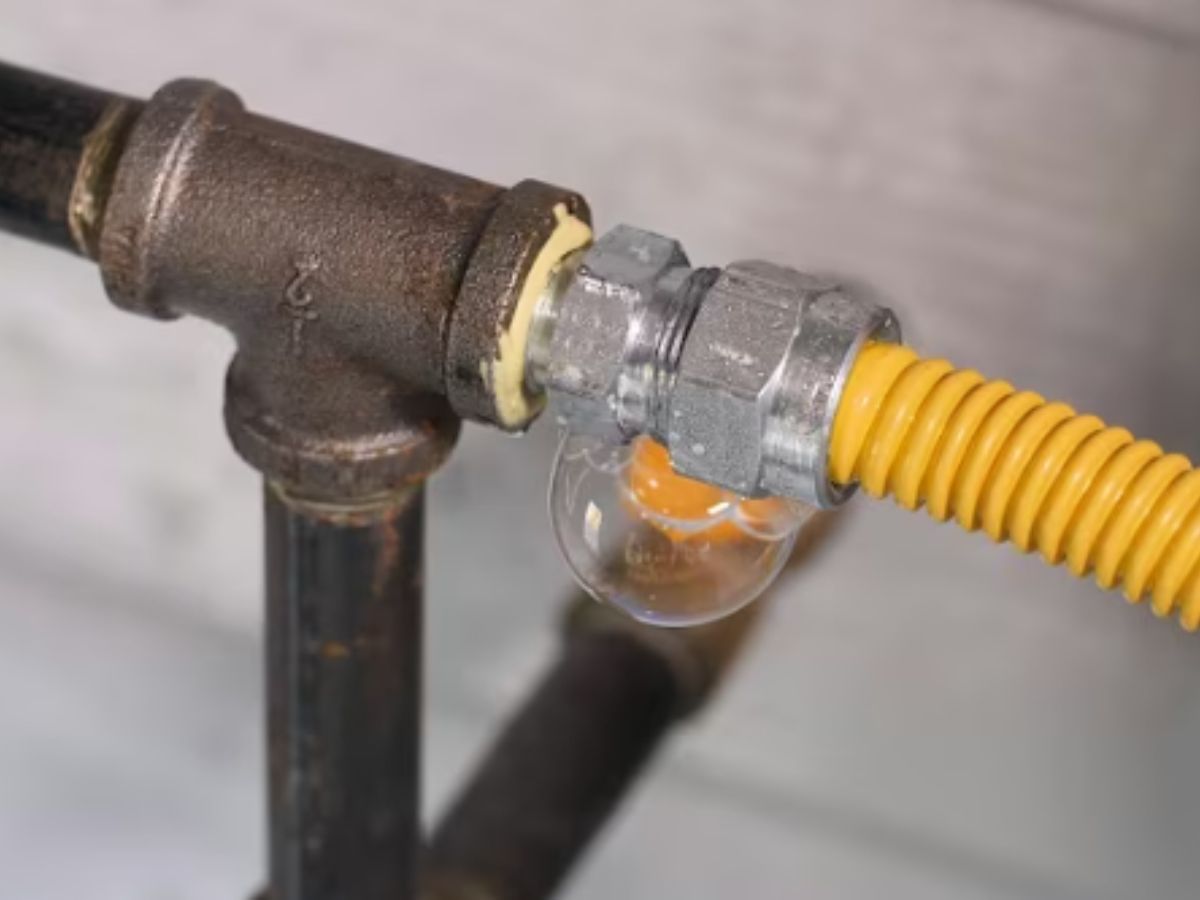
Gas line installation and repair in Wilmington, NC covers running new gas lines for appliances like ranges, dryers, and outdoor grills. It also covers repairing an existing line that's leaking or damaged, and connecting new gas-fired equipment such as a tankless water heater or a gas furnace.
Any work on a gas line is licensed plumbing work in North Carolina, tested for leaks before it's put into service, and never left as a temporary fix. A gas connection either passes a pressure test or it doesn't, and we don't consider a job done until it does.
Emergency gas line repair after you are safe
If you smell gas, safety comes before plumbing. Leave the building, keep everyone away from it, and call 911 and your gas utility from outside. Do not turn lights or appliances on or off, and do not use a phone inside the building.
Once the utility has made the area safe, call our emergency line. We find the leak with a pressure test, repair or replace the damaged section, and pressure test the line again before gas is turned back on to your appliances.
If you smell gas: what to do before we arrive
- Leave the building immediately with everyone inside, and do not stop to gather belongings.
- Do not use switches, lighters, or phones inside the building, and do not start a vehicle in an attached garage.
- Call 911 and your gas utility from a safe distance outside.
- After the area is cleared, call (919) 944-7281 so we can inspect and repair the line.
Why gas line condition matters in older Wilmington homes
Homes built before the 1980s in the downtown Wilmington area sometimes still have original black iron gas piping, which can develop threaded-joint leaks over many decades even without any external damage. The area's humid coastal air accelerates corrosion at exposed threaded fittings the same way it does on water supply lines. An older gas line is worth a real inspection, not an assumption that it's fine because nothing smells wrong today.
Adding new gas-fired equipment, a generator for hurricane-season backup power, an outdoor kitchen, or a tankless water heater, often means extending an existing line rather than running an entirely new one. That means confirming the existing line and meter can actually support the added load before installation starts.
Signs you need a gas line professional, not a DIY fix
- A rotten-egg smell near an appliance, meter, or gas line, even faint.
- A hissing sound near a gas line or connection.
- A gas appliance that won't stay lit or burns with a yellow, flickering flame instead of blue.
- Dead or discolored vegetation in a patch above a buried gas line.
- You're adding a new gas appliance and need a line extended.
Inspections, appliance hookups, and conversions
Not every gas call is an emergency. Callers ask about adding a gas fireplace or insert, connecting a stove, converting an appliance from natural gas to propane, or inspecting a line before a sale.
We pressure test the line, size it for the load, and check every connection. Appliances and fuel conversions have specific requirements, so we confirm the model before work starts.
Gas line work from the beach to downtown
Beach homes on Wrightsville Beach and Carolina Beach add gas lines for outdoor grills and standby generators ahead of hurricane season. Restaurants downtown need reliable lines to commercial ranges.
We pressure test every new line and check every connection before gas is turned on, whether the house is in Ogden or an older bungalow near the Cape Fear River.
How we handle gas line work
For a suspected leak, if it's safe to do so, shut off the gas supply and get everyone out and away from the area before calling. Do not operate any switches or open flames near a suspected leak. We locate the exact leak point using a combination of pressure testing and gas detection equipment, never guesswork.
For new installations, we size the line correctly for the appliance's BTU demand and the total load already on the existing line, since undersizing a gas line is a real safety issue, not just a performance one.
Every new connection and every repair gets pressure-tested before we consider the job complete, confirming the line holds pressure with no measurable drop over the test period.
Want us to take a look? Call (919) 944-7281 and we'll walk through what you're seeing.
Common gas line jobs
| Job | Typical scope | Why it matters. |
|---|---|---|
| New appliance connection | Extend or tap an existing line, size for BTU load | Undersizing a line is a safety issue, not just a performance one. |
| Leak repair | Locate and repair the specific failed joint or section | A pressure test confirms the fix actually holds before the job is called done. |
| Line replacement | Full replacement of aging black iron piping | Sometimes more cost-effective than repeated joint repairs on a very old line. |
What affects the price
- New installation versus repair of an existing line.
- Length of line and number of fittings or joints involved.
- Appliance BTU demand and whether the existing line supports it.
- Whether a permit and inspection are required for the specific work.
Non-emergency estimates are free. For emergency work, we give you the real number before we start. Want yours? Call (919) 944-7281.
What we take seriously on every gas job
We never leave a gas connection untested. If it doesn't hold pressure, we find out why before anyone uses the appliance, not after.
If a job requires a permit under City of Wilmington or New Hanover County code, we handle that as part of the work rather than skip it to save time.
Questions before you decide? Call (919) 944-7281, 24/7.
Gas line questions from Wilmington homeowners
Leave the area immediately, do not use any switches, phones, or open flames inside, and call your gas utility from a safe distance before calling us. Safety comes first, always.
Yes, including sizing the line correctly and pressure-testing the connection before it's used.
Yes. We confirm the existing line and meter can support the added BTU load before installation.
Original black iron piping in pre-1980s homes can develop threaded-joint leaks over decades. It's worth having inspected, especially before adding new gas equipment.
When the job requires one under local code, yes, as part of the installation or repair.
Yes. We confirm the line size, run or extend the line, connect the appliance, and test for leaks.
Many can, with the manufacturer's conversion kit. We check the model and make the conversion safely.