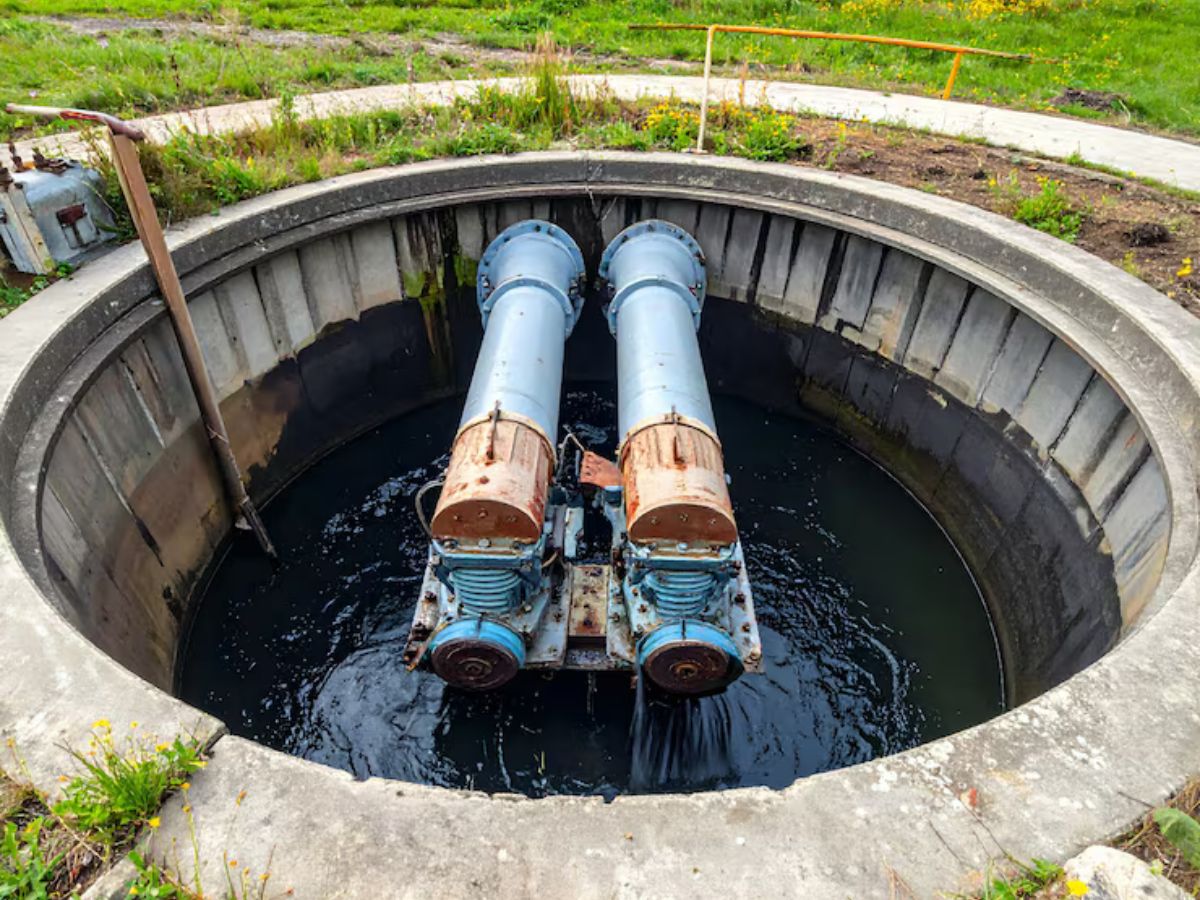
A sump pump sits in a pit at the lowest point of a crawl space or yard drain system. When water fills the pit, a float switch turns the pump on and pushes the water out through a discharge line, away from the house. A check valve keeps that water from running back in.
Most Wilmington homes sit on slabs or crawl spaces rather than basements, so a sump pump here protects a crawl space, a drainage basin, or a low-lying yard. Our post on crawl space moisture in Wilmington explains why that space collects water in the first place.
Call (919) 944-7281 if your pump is humming without moving water, running nonstop, or silent while the pit is full.
Emergency sump pump repair when the pit is filling
A sump pump fails at the worst moment, during heavy rain, when the pit fills fastest and the power may be out. A pump that hums without moving water, runs without stopping, or sits silent in a full pit needs help before the water reaches the crawl space or the living area.
Call the emergency line during a storm or any time the pit is full. We ask about the pump, the switch, and the power, and send a plumber to restore pumping with a repair, a replacement, or a temporary pump while the permanent fix is arranged.
Before we arrive: what to do about a failed sump pump
- Check that the pump is plugged in and that the GFCI outlet and breaker have not tripped.
- Look for the float switch stuck against the pit wall and free it only if you can do so safely.
- Do not stand in water near electrical outlets, extension cords, or the pump power cord.
- Call (919) 944-7281 and tell us how high the water is and whether the power is on.
Why Wilmington sump pumps work harder than most
New Hanover County sits on low, flat coastal ground with a shallow water table. Sandy soil lets rain soak in quickly, but the groundwater below rises fast during a long storm and has little room to drain away. A pump in a low spot may run for hours after a single heavy downpour.
Tropical systems are the real test. A slow-moving storm can dump days of rain on ground that is already wet, and the power often fails at the same moment. A pump with no battery backup stops working exactly when the pit is filling fastest.
Neighborhoods near the Intracoastal Waterway and the river marshes, such as Ogden, Porters Neck, Myrtle Grove, and Navassa, see this most. Older downtown homes with low crawl spaces face the same pressure on a different scale.
Signs your sump pump needs attention
- The pump runs constantly, even when the pit looks nearly empty.
- The motor hums or buzzes but no water leaves the discharge line.
- Standing water in the pit or crawl space that the pump is not clearing.
- A musty smell or fresh condensation on pipes and insulation under the house.
- A loud rattling or grinding noise during a cycle.
- A pump that is more than ten years old and has never been tested.
Sump pumps, ejector pumps, and storm water
Callers often confuse a sump pump with a sewage ejector pump. A sump pump moves ground and storm water away from a pit. An ejector pump lifts wastewater from a low bathroom or basement to the sewer line.
If water is coming up in a basement or crawl space after a storm, the first question is where the water is coming from. A failed pump is one answer. Foundation seepage or grading may be another, and we will tell you when the cause is not plumbing.
Sump pump calls near the water
Low ground close to the Intracoastal Waterway puts Ogden, Porters Neck, and the Hickory Knoll area of Myrtle Grove at the front of the line after heavy rain.
In Navassa, between two rivers, and on Wrightsville Beach, the water table is just as shallow. A tested pump and a battery backup make storm season far less stressful.
Why a pump fails when you need it most
Float switches are the most common weak point. They stick against the pit wall, tangle in the power cord, or wear out from thousands of cycles. When the switch fails, the pump either never starts or never stops.
Debris is the second cause. Sand and silt carried into the pit by groundwater can jam the impeller or clog the intake. A failed check valve lets discharged water run back into the pit, so the pump cycles again and again until it burns out.
How we test and fix a sump system
We start by checking power and the float switch, then pour water into the pit to watch a full cycle. That tells us whether the pump starts, how fast it moves water, and whether it shuts off cleanly.
Next we trace the discharge line to make sure it runs away from the foundation and is not frozen, crushed, or clogged. We check the check valve and the pit lid, and we confirm the outlet is a working GFCI circuit.
If the pump is worn out, we replace it with a unit sized for the pit and the actual inflow. If the system has no backup, we talk through battery backup options before the next storm season.
Want us to take a look? Call (919) 944-7281 and we'll walk through what you're seeing.
Repair, replace, or add a backup
| Situation | Usual approach | Why. |
|---|---|---|
| Stuck or worn float switch on a newer pump | Switch replacement | A small repair restores a pump whose motor is still sound. |
| Pump older than about ten years or failing repeatedly | Full pump replacement | A worn motor will fail again, and a new unit costs less than repeated service calls. |
| Power fails during storms in your area | Add a battery backup | A backup pump keeps water moving when the main pump has no electricity. |
What affects the price
- Float switch or check valve repair versus full pump replacement.
- Pump size and capacity needed for the pit and inflow rate.
- Whether a battery backup or water-powered backup is added.
- Condition and routing of the discharge line.
- Access to the crawl space or pit.
Non-emergency estimates are free. For emergency work, we give you the real number before we start. Want yours? Call (919) 944-7281.
What we won't do
We won't replace a working pump because it is old. If a simple float switch fix gets it running reliably, that is what we will recommend.
We also won't promise a dry crawl space from a pump alone. If water is entering because of a grading, gutter, or vapor barrier problem, we will tell you so and explain what else needs attention.
Questions before you decide? Call (919) 944-7281, 24/7.
Sump pump questions from Wilmington homeowners
Many do not, but homes in low-lying areas or with wet crawl spaces often benefit. Neighborhoods near the Intracoastal and river marshes see the most use.
Most last about seven to ten years, depending on how often they run. Pumps in wet areas that cycle constantly wear out sooner.
A stuck float switch, a failed check valve, or a high water table can each cause constant running. We test the system to find which one it is.
It keeps water moving during a power outage for a limited time. Capacity depends on the battery, so we size it to the storm conditions you expect.
Yes. We set the pit, pump, check valve, and discharge line so water exits well away from the foundation.
Test it at least once a year and before the start of hurricane season by pouring water into the pit and watching a full cycle.
No. Water that enters through the foundation after heavy rain is usually a drainage or grading problem. We check the plumbing first and tell you if the source is elsewhere.